Cinema has been an extremely popular pastime in cities throughout the world for over a century and Ottawa has been no different. Many theatres in the city have brought entertainment to its citizens throughout the years, even including some of the first moving pictures ever shown. So sit back with some popcorn because Forgotten Ottawa is going to the movies.
The Holland Brothers
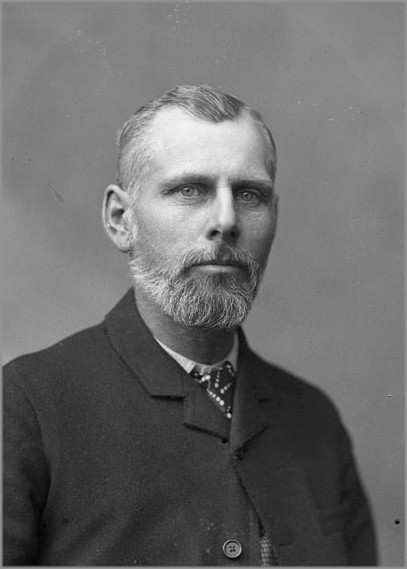
Source: Topley Studio / Library and Archives Canada / PA-208770
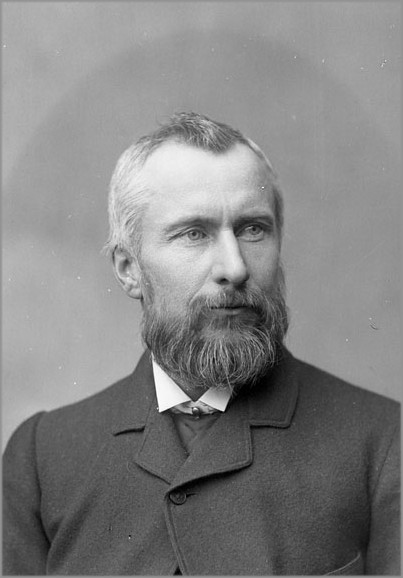
Source: Topley Studio / Library and Archives Canada / PA-206311
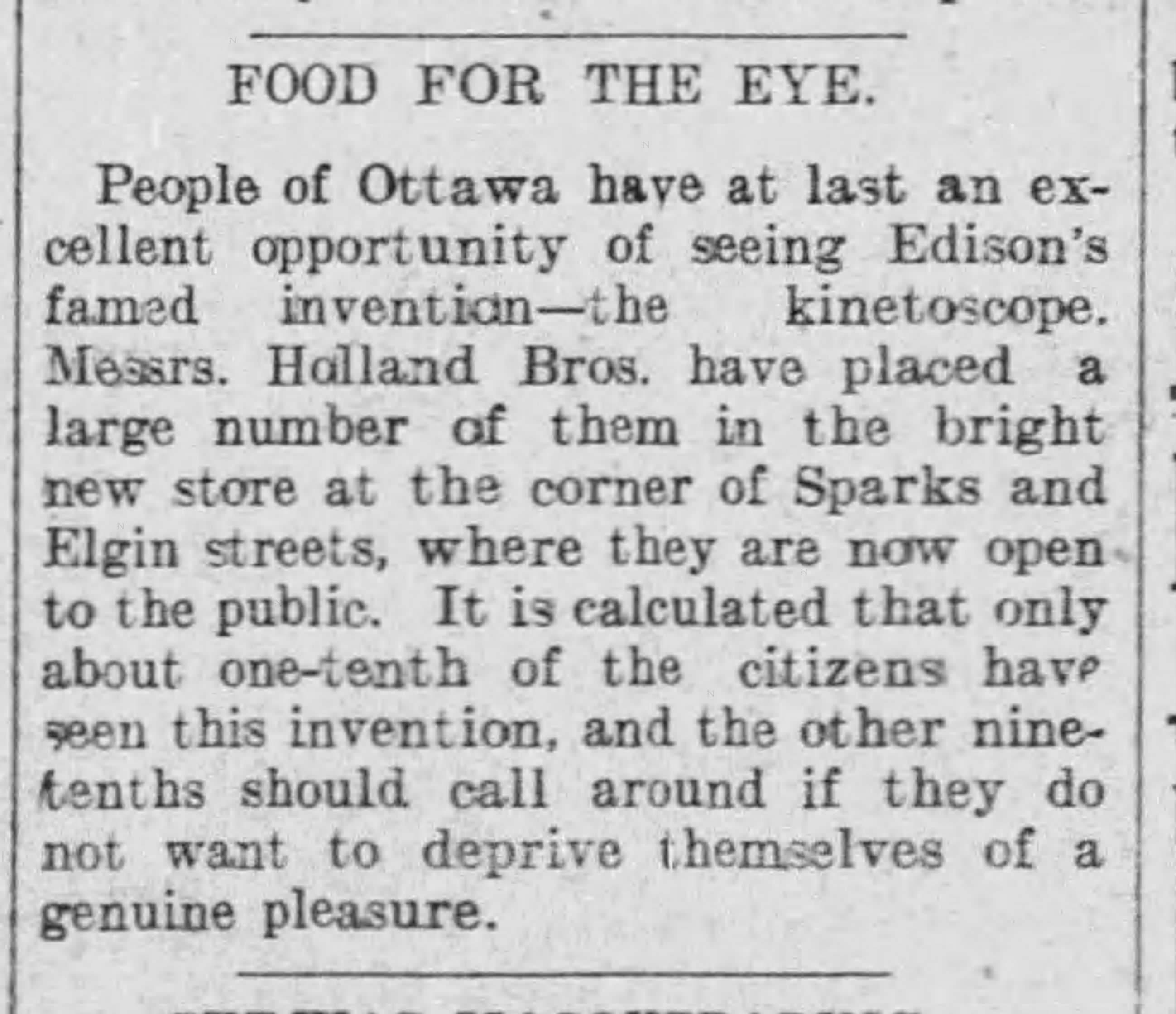
In the infant years of cinema technology, two brothers from Ottawa played an integral part in getting the technology to a larger audience. Andrew and George Holland (for whom Holland Avenue was named) were employees of the Edison Company. The Edison Company had developed the Kinetoscope, a device which allowed a single viewer to watch a film through a peephole. The Holland brothers setup the first Kinetoscope parlor in the world in New York City in 1894[1]. They then proceeded to open a parlor in Ottawa on November 3, 1894 by placing several Kinetoscopes in a store on the corner of Sparks and Elgin Streets[2].
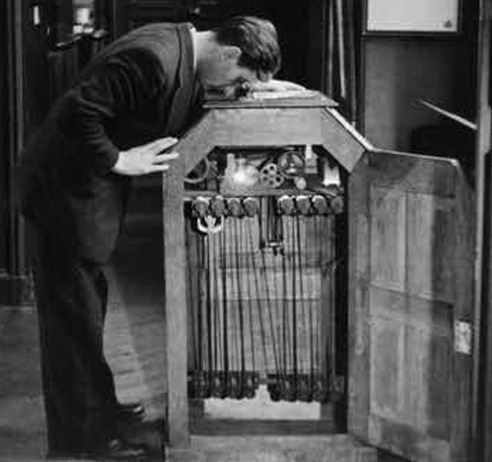
Source: Unusual Disappearing Devices #5: The Kinetoscope (birth of video projection) - Cobra Blog
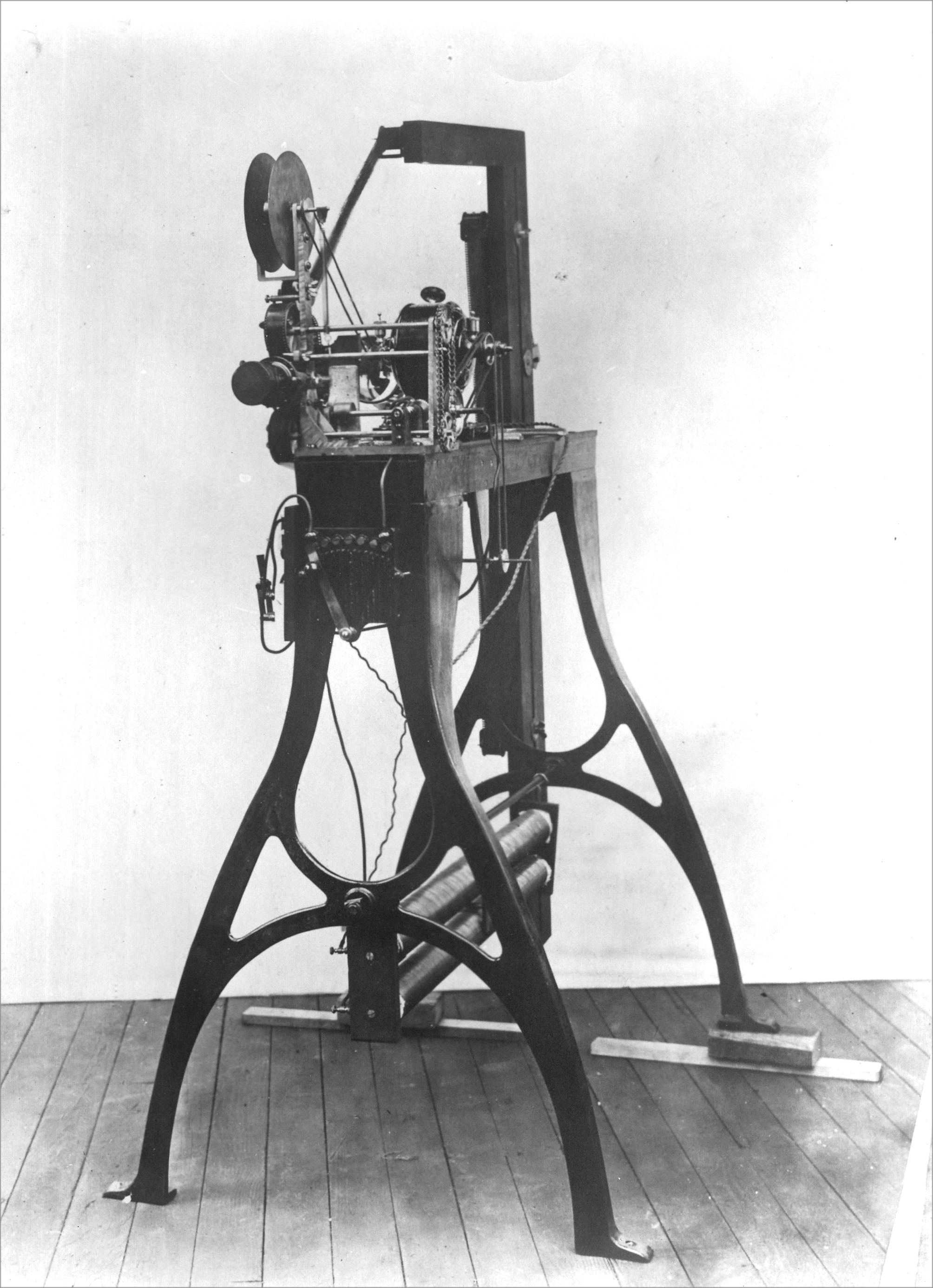
Source: Wikimedia Commons
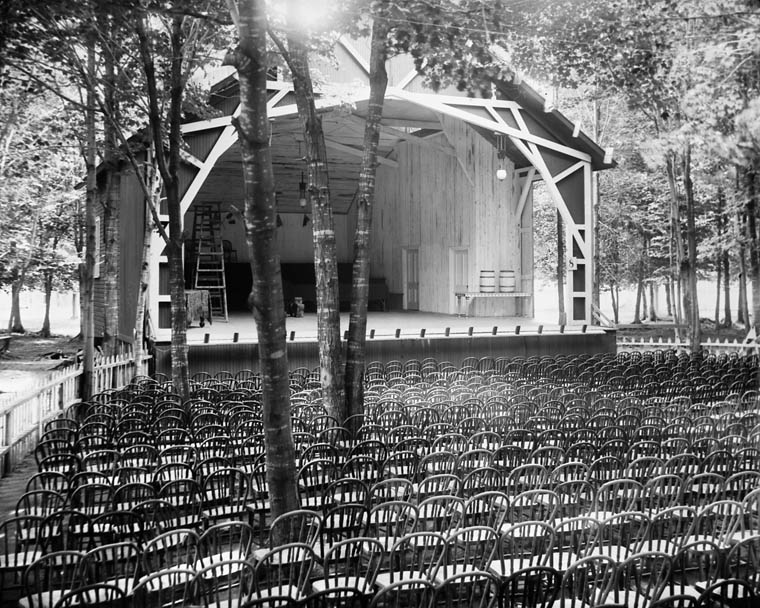
After the development of the vitascope, a device which projected a moving image onto a screen, the brothers brought one back to Ottawa. As the vitascope allowed multiple people to watch the same image, the brothers set one up at West End Park, just off what is now Holland Avenue[3]. In front of an audience of between 600 and 800 people, the brothers showed “half a dozen scenes” including Brooklyn and the breakwaters at Coney Island which when the huge breakers came tumbling caused the “occupants of the front benches [to] involuntarily [move] back to prevent a shower”[4] as the Ottawa Journal described it. Not only was it the first exhibition of the device in Ottawa, it was most likely the first public viewing in Canada as the brothers had exclusive rights to the vitascope north of the border[1].
Nickelodeons & The Silent Era
Initially, movies were shown in exhibitions, often with travelling shows. In Ottawa, movies were often shown at Britannia-On-The-Bay, a seasonal amusement park at Britannia Village[5]. By 1906, shops began to convert parts of their stores to movie parlors known as “nickel theatres” or nickelodeons. These nickelodeons would show only short films.
It is difficult to determine which nickelodeons were first to show movies in Ottawa as they rarely advertised in the local paper[6]. An article in the Ottawa Journal in 1915, says the Unique Theatre on Rideau Street was the first nickel theatre in Ottawa to start showing movies regularly “in a store with little to no ventilation”[7].
The Monument National advertised “moving pictures” for the opening of their “Capitaloscope” on Oct 29, 1906[8]. The Ottawa Journal devoted an entire article to the grand opening of Bennett’s Theatre on Dec 10, 1906 with “the Governor-General and party from Government House, Lady Laurier and party, His Worship the Mayor and members of the city council, and a number of members of parliament” in attendance[9].
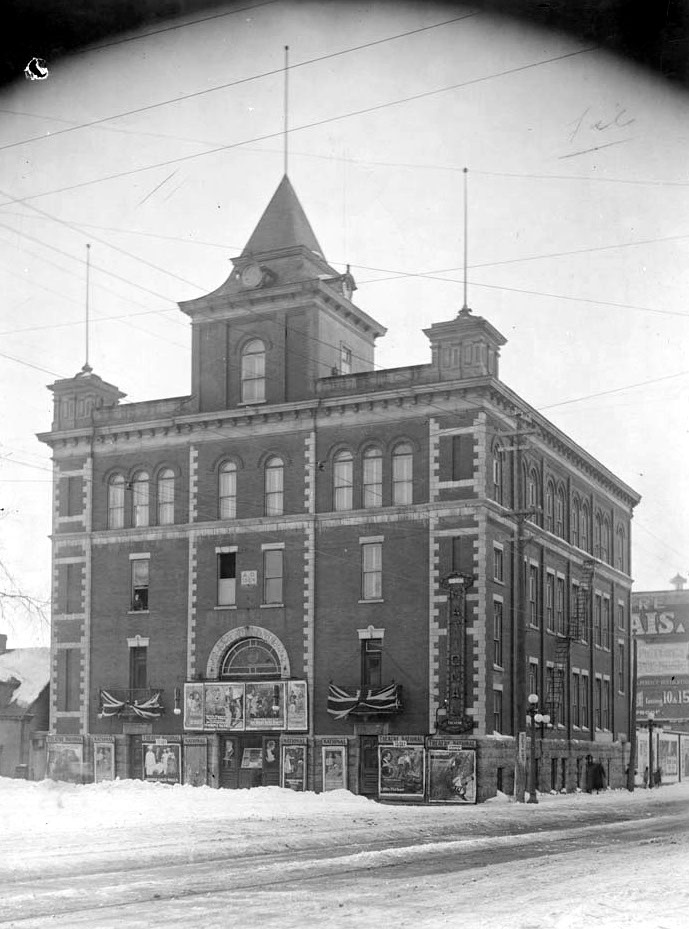
Source: Canada. Dept. of Public Works / Library and Archives Canada / PA-120100
However, in these early years of theatre, there was some opposition to their existence. In the 1915 article, it was described that “people were very much afraid of the first picture shows... mothers could be seen taking their children across the street as if afraid of germs”[7]. In 1910, some city councilors asked to impose a $200 license fee in hopes of shutting down the moving picture venues in the city[10]. In 1912, churches in the Glebe protested the addition of a movie theatre in their community asking the city not to grant a license to the owner[11].
However, as more feature length films were released, movies became a more accepted and in fact popular form of entertainment. Vaudeville theatres in Ottawa began to show more and more movies[6]. The Family Theatre, which featured vaudeville acts, became one of the first in Ottawa to show long movies. The Français Theatre, originally opened in June 1913 to show both vaudeville shows and movies, was later converted to an all-picture theatre[6]. The Flower Theatre was one of the first, if not the first, theatres to open in Ottawa exclusively to show movies on June 30, 1914[12]. The Imperial followed close behind opening on August 24, 1914[13]. The Family, the Français and the Imperial came to be known as “The Three Twins”[14].
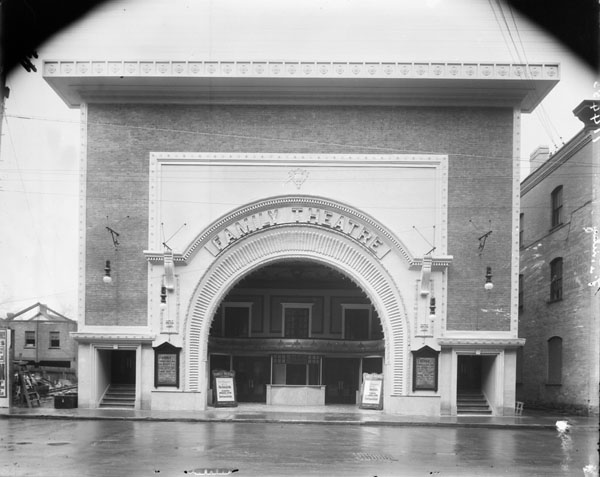
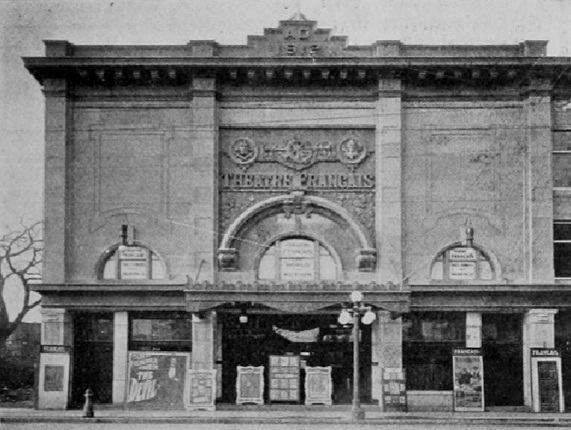

Sources:
Family Theatre: William James Topley/Library and Archives Canada/PA-042686
Français Theatre: Francais Cinema in Ottawa, CA - Cinema Treasures
Imperial Theatre: Archives of Ontario - Item - RG 56-11-0-179
Talkies
1928 saw another major milestone of cinema in Ottawa, the first movies with synchronized sound, known originally as “talkies”. On Boxing Day of that year, the Regent Theatre became the first venue to show a talkie in the city. The main feature was the “Street Angel” however it contained only synchronized music, no dialogue. The shorts that preceded it did contain dialog. The first short included statesmen, diplomats and others in Paris signing the Kellogg Treaty to outlaw war. Next came the Prince of Wales officiating the opening of a new dock at Bristol in England. Another featured an opera singer with an orchestra which “sounded extraordinarily rich and true” according to the Ottawa Citizen. Lastly, a comedy called “The Family Picnic” was shown before the feature presentation[15].
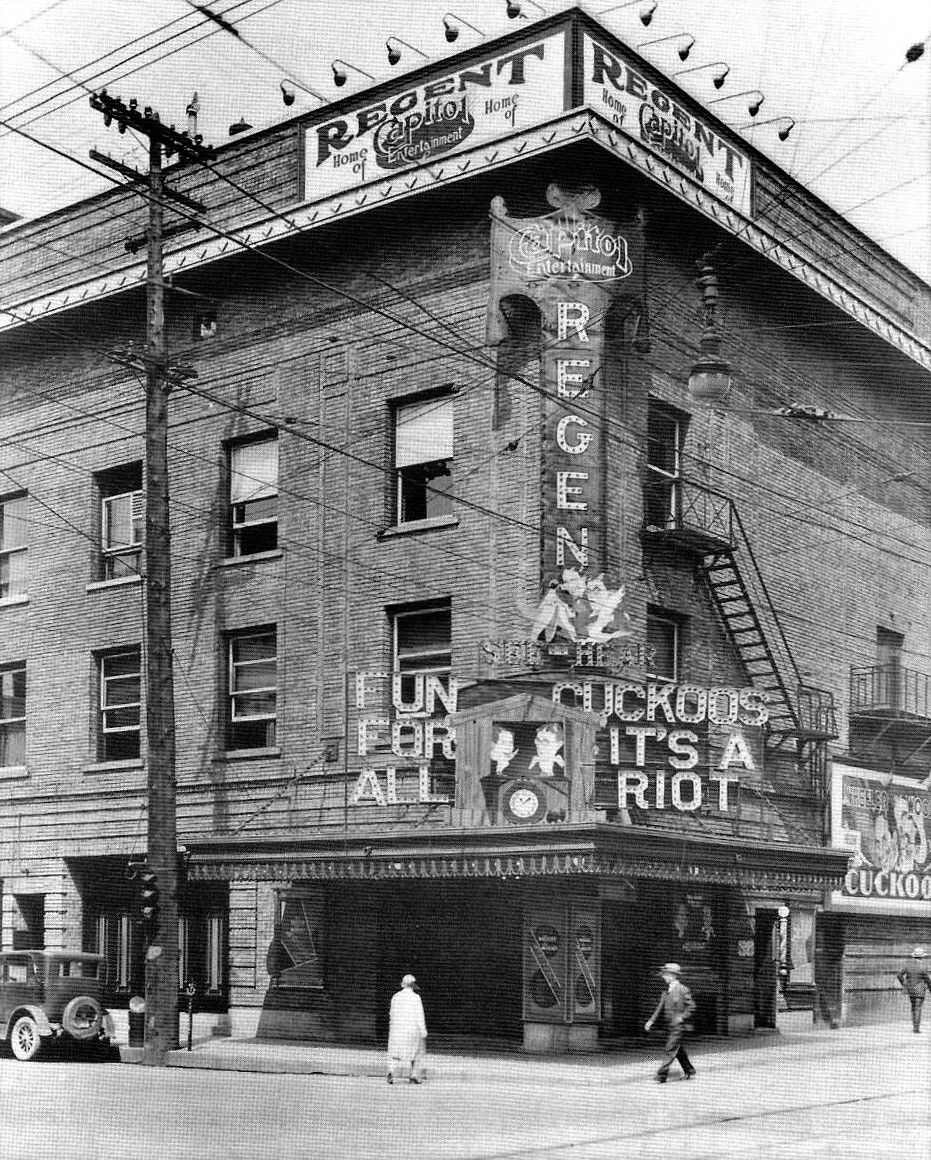
The first movie with sound to show on the north side of the Ottawa river was on October 12, 1929 at the Laurier Cinema-Theatre in Hull. The movie was The Godless Girl which had been banned by the Ontario Board of Censors[16].
Drive-in Theatres
After the Second World War and the expansion of the automobile, drive-in theatres were popping up all over North America. Although the Auto-Sky Drive-In theatre was first to begin construction at the corner of Baseline and Fisher, the Drive-In Theatre near Britannia was the first drive-in theatre to open in Ottawa on July 15, 1948. The Auto-Sky followed almost 2 weeks later on July 28.
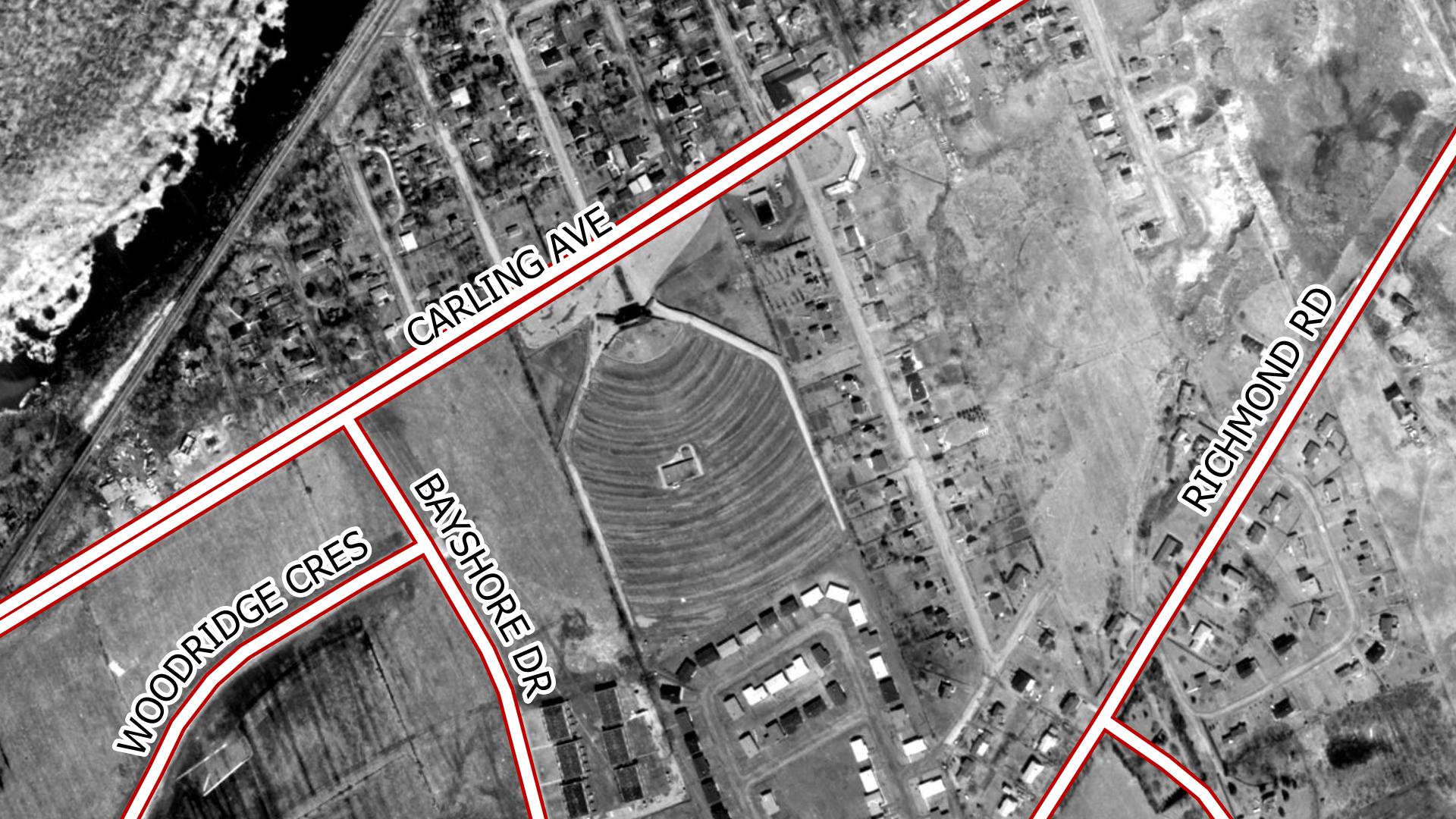
Source: GeoOttawa Air Photos (1965)
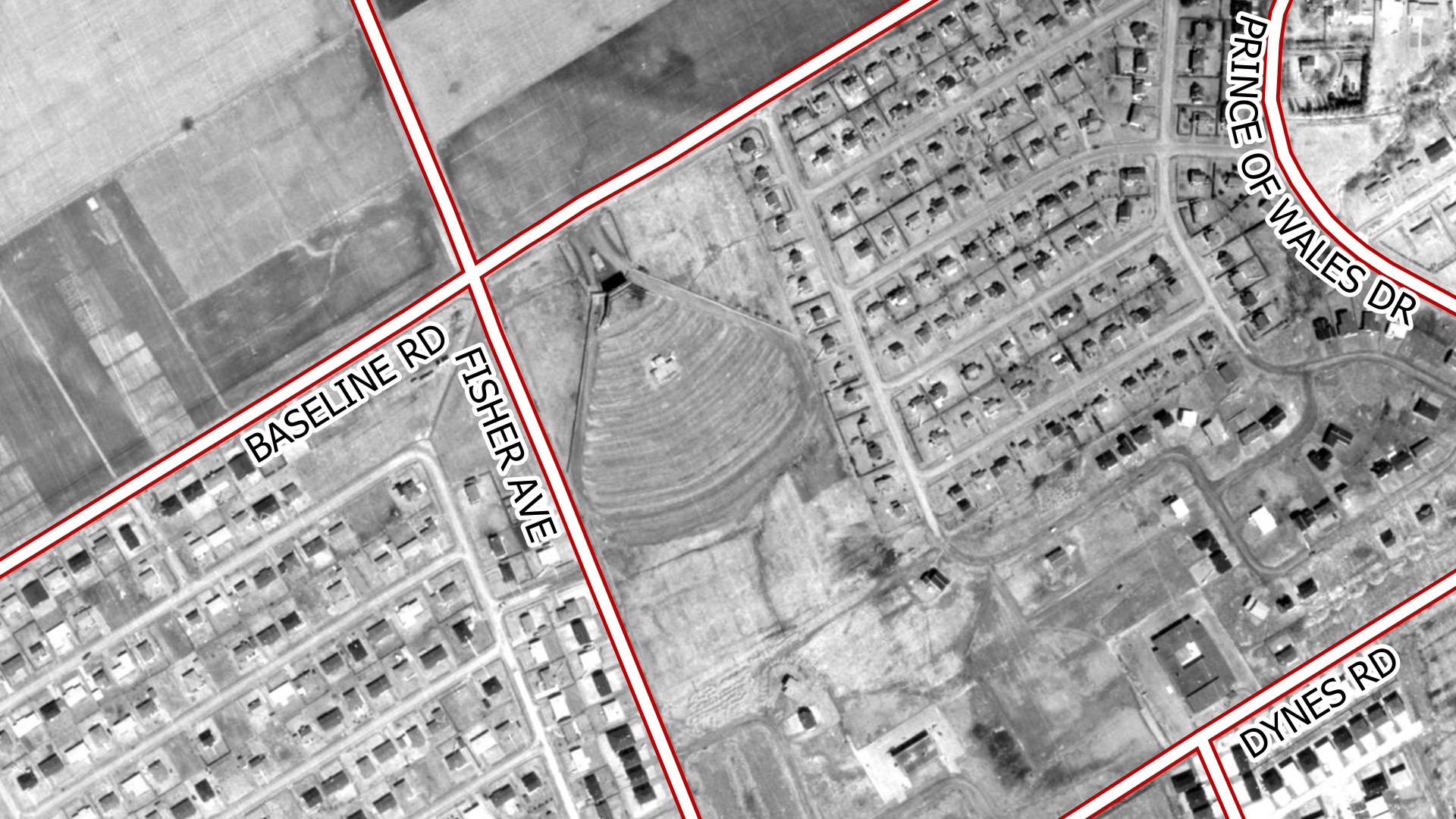
Source: GeoOttawa Air Photos (1965)
Over the next 26 years, 5 more drive-ins opened in the Ottawa-Hull area, the Aladdin and Star-Top drive-ins in 1951, Queensway Drive-In in 1963, Airport Drive-In in 1970 and Ciné-Parc Templeton in 1974. During the 70s and 80s, drive-ins became less and less popular and they slowly began to close, with the Airport Drive-in, the last one in Ottawa, closing in 1997 and Ciné-Parc closing in 2019.
The Modern Day
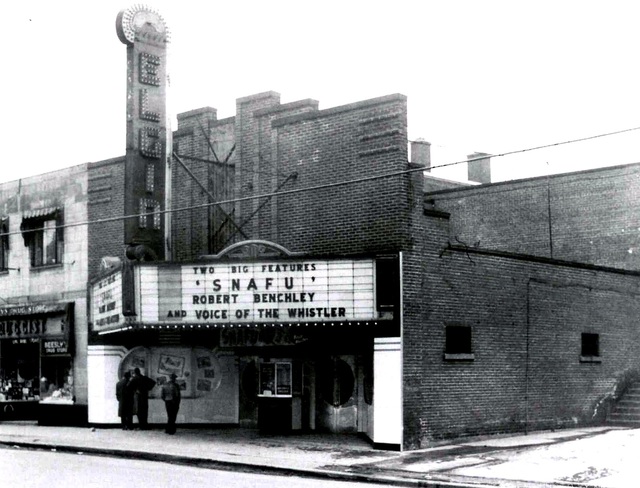
It’s been said the Elgin Theatre became the first multiplex theatre in the world. Nat Taylor, owner of the Elgin, added a second screen in 1947, nicknamed the Little Elgin, one of the first theatres in Canada to have twin screens. However, both screens would show the same movie at the same time. By 1957, Taylor became annoyed that the film industry would force him to stop showing one popular movie for a new release. He came up with the idea of showing the popular movie in one theatre and the new release in another thus starting the multiplex theatre[17].
With the popularity of shopping malls came mall theatres. One of the first in the Ottawa-Hull area was the Vendome Theatre at Place Cartier Shopping Centre in Hull. Later came Odeon’s St. Laurent Cinema at the St. Laurent Shopping Centre, Westgate Cinemas at Westgate Shopping Centre and Cineplex 6 at the Kanata Town Centre to name a few.
On June 29 1989, an Omnimax (part of IMAX) theatre opened along with the Canadian Museum of Civilization (now the Museum of History) with a screen almost 7-storeys in size[18]. The first film shown on this massive screen debuted on July 4 and was called The First Emperor of China[19]. The film was a joint venture between the National Film Board and China.
In the late 90s, larger theatres with 12 or more screens opened across Ottawa including South Keys, the Coliseum, SilverCity, and AMC Kanata which contains 24 screens.
Some of the earlier theatres still exist with some still offering movies while others have found new lives. For instance, the Nelson Theatre, now the Bytowne, and the Mayfair still show movies to this day. The Elgin on Elgin St now contains a group of restaurants. The Imperial on Bank St is now home to Barrymore’s, a venue for concerts. The Elmdale Theatre on Wellington St is home to the CornerStone House of Refuge Apostolic Church on Wellington. The Linden Theatre on Beechwood Ave is now a drugstore. The Avalon on Bank is a Home Hardware and Mexican restaurant. The Empire Theatre on Bank St. is vacant except for stores on the ground floor but is slated for development. The Cinema de Paris in Hull is now a private residence. And the Cinema Cartier in Hull is now a computer training school.
Sources:
- Russell, Hillary. All that Glitters: A Memorial to Ottawa's Capitol Theatre and its Predecessors, 2006. Accessed May 3, 2026. http://parkscanadahistory.com/series/chs/13/chs13-1f.htm
- “Food For The Eye”. Ottawa Daily Citizen. November 4, 1895, 8. Accessed May 3, 2026. https://www.newspapers.com/image/456142467
- “Edison's Vitascope at West End Park”. The Ottawa Journal. July 20, 1896, 1. Accessed May 3, 2026. https://www.newspapers.com/image/43431835
- “Edison's Vitascope - The Wonderful Instrument Shown at West End Park”. The Ottawa Journal. July 22, 1896, 1. Accessed May 3, 2026. https://www.newspapers.com/image/43431878
- “Britannia-on-the-Bay”. The Ottawa Citizen. June 11, 1904, 6. Accessed May 3, 2026. https://www.newspapers.com/image/456206840
- Russell, Hillary. All that Glitters: A Memorial to Ottawa's Capitol Theatre and its Predecessors, 2006. Accessed May 3, 2026. http://parkscanadahistory.com/series/chs/13/chs13-1n.htm
- “Phenomenal Growth of Theatrical Business In Ottawa - Theatres Will Now Seat Fifteen Thousand People”. The Ottawa Journal. October 9, 1915, 11. Accessed May 3, 2026. https://www.newspapers.com/image/41637099
- “Great Opening Capitaloscope”. The Ottawa Journal. October 27, 1906, 16. Accessed May 3, 2026. https://www.newspapers.com/image/41495420
- “Opening of New Theatre”. The Ottawa Journal. December 11, 1906, 5. Accessed May 3, 2026. https://www.newspapers.com/image/41734534
- “Much Talking At City Council”. The Ottawa Citizen. August 25, 1910, 3. Accessed May 3, 2026. https://www.newspapers.com/image/455732843
- “Churches Protest 'Movies' On Glebe”. The Ottawa Citizen. December 20, 1912, 13. Accessed May 3, 2026. https://www.newspapers.com/image/456238866
- “Flower Theatre One of Prettiest In The Capital”. The Ottawa Journal. July 2, 1914, 15. Accessed May 3, 2026. https://www.newspapers.com/image/46200371
- “Imperial Theatre Crowded When It Opened Its Doors”. The Ottawa Journal. August 25, 1914, 2. Accessed May 3, 2026. https://www.newspapers.com/image/43911195
- “The New Imperial Theater”. The Ottawa Citizen. August 22, 1914, 15. Accessed May 3, 2026. https://www.newspapers.com/image/455656365
- “Talking Movies Make Debut for Ottawa People”. The Ottawa Citizen. December 27, 1928, 2. Accessed May 3, 2026. https://www.newspapers.com/image/455672632
- Ouimet, Raymond. “L'arrivée du cinéma à Gatineau”. Le Droit. May 14, 2021. Accessed May 3, 2026. https://www.ledroit.com/2021/05/17/larrivee-du-cinema-a-gatineau-5127d3809cf758ab72056921d60e8128/
- David Johnston and Tom Jenkins. Ingenious: How Canadian Innovators Made the World Smarter, Smaller, Kinder, Safer, Healthier, Wealthier and Happier. Illustrated edition. Toronto: McClelland & Stewart, 2017. https://books.google.ca/books?id=j6M8DgAAQBAJ
- “Museum offers plenty of room with a view”. The Ottawa Citizen. August 17, 1987, 3. Accessed May 3, 2026. https://www.newspapers.com/image/463684760
- “First Emperor: an Omnimax eyeful well worth the wait”. The Ottawa Citizen. June 29, 1989, 33. Accessed May 3, 2026. https://www.newspapers.com/image/463998554