On 8 May 1910, a series of detonations at an explosives factory in Hull devastated the city with property damage and many killed or injured. Before continuing, this story includes graphic descriptions of the explosion that may be disturbing to some.
General Explosives Ltd.
On 4 July 1905, General Explosives Company of Montreal Ltd. (GEC) was incorporated with Richard Lacy Dillon, John McMartin and Ernest Arthur LeSueur as directors[1]. LeSueur was born in Ottawa and graduated from MIT as an electrical engineer[2]. By August of that year they looked at setting up shop in Hull and told the city the new explosives would not contain the ingredients of gunpowder or dynamite and could not be exploded by fire[3]. The company built their facility between the Canadian Pacific Railway lines to Lachute and the other to Maniwaki.
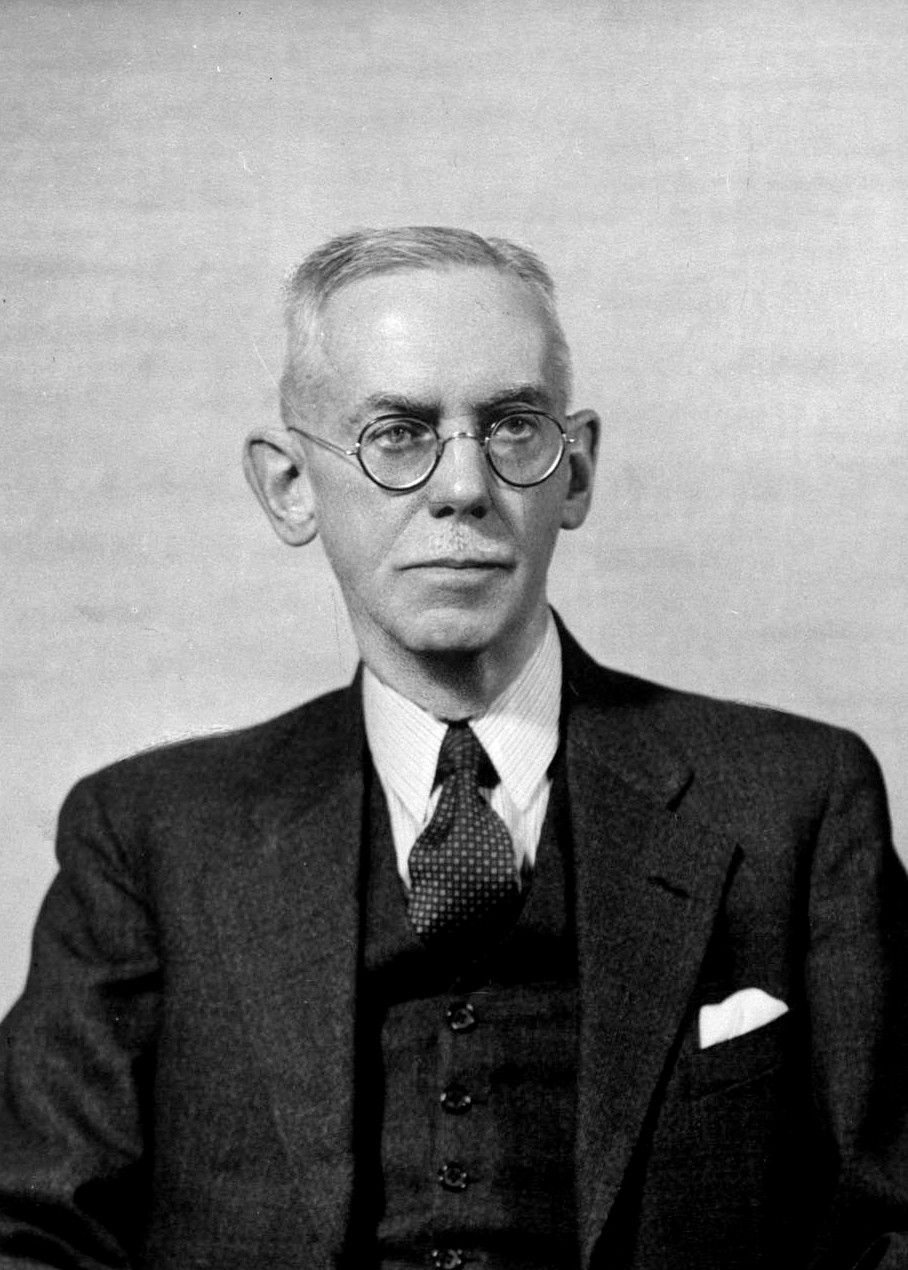
Source: Library and Archives Canada, archival reference number R11325-3, PA-215518
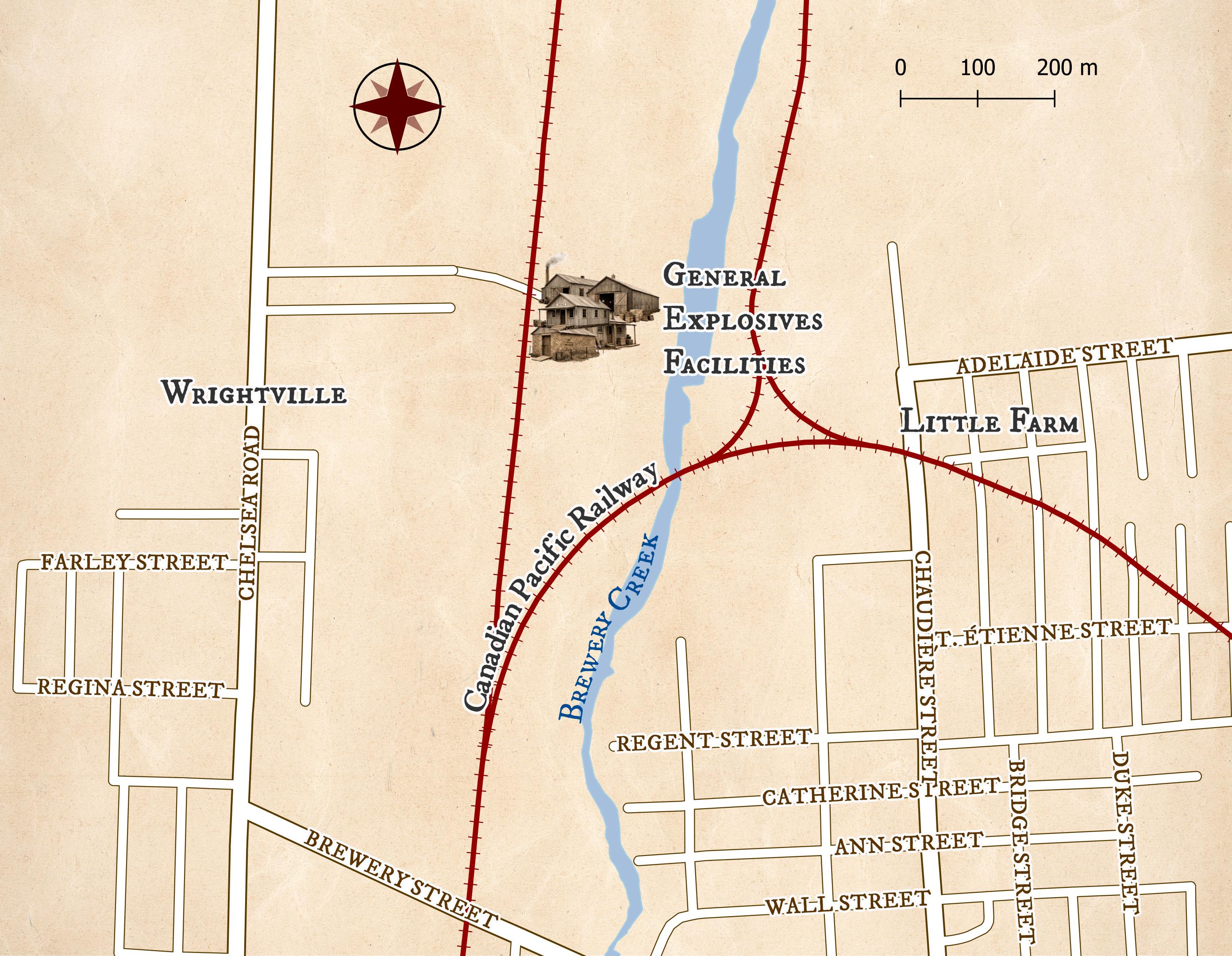
Source: Map created by Kevin Ballantyne
From the very start, the city was not comfortable having an explosives factory within the city limits and in June 1906, council passed a motion giving GEC two months to find another location outside the city[4]. The company asked the council to reconsider, saying they had obtained a permit to build and had spent all their capital on construction of the facilities. Finding another location would be a great loss to them.
The city took out an injunction with the Superior Court to have them vacate when GEC refused to comply[5][6]. Many residents in the area also signed a petition against the continuance of the company. Despite these objections, the Superior Court judge dismissed the injunction put forth by the city and the company remained at their location[7]. The judge in the case would not live to regret his decision as he died 5 months before the explosion occurred[8]. Even before the end of 1906, a minor fire occurred at the factory when a man burnt his arm while shutting off the power at the main switchboard[9].
The Explosion
It was a quiet Sunday, May 8, 1910 with many gathered to enjoy a baseball game 500 metres from the factory. One man was present on the grounds, Joseph Belanger, who lived in the company’s shack. He had decided to go for a walk as he’d been sleeping all day.
While he was gone, a fire started in one of the buildings which triggered the detonator caps in the company office around 5:35pm. When Belanger saw the fire shooting out of the office, he realized there was nothing that could be done so he just stood and waited on the tracks[10].
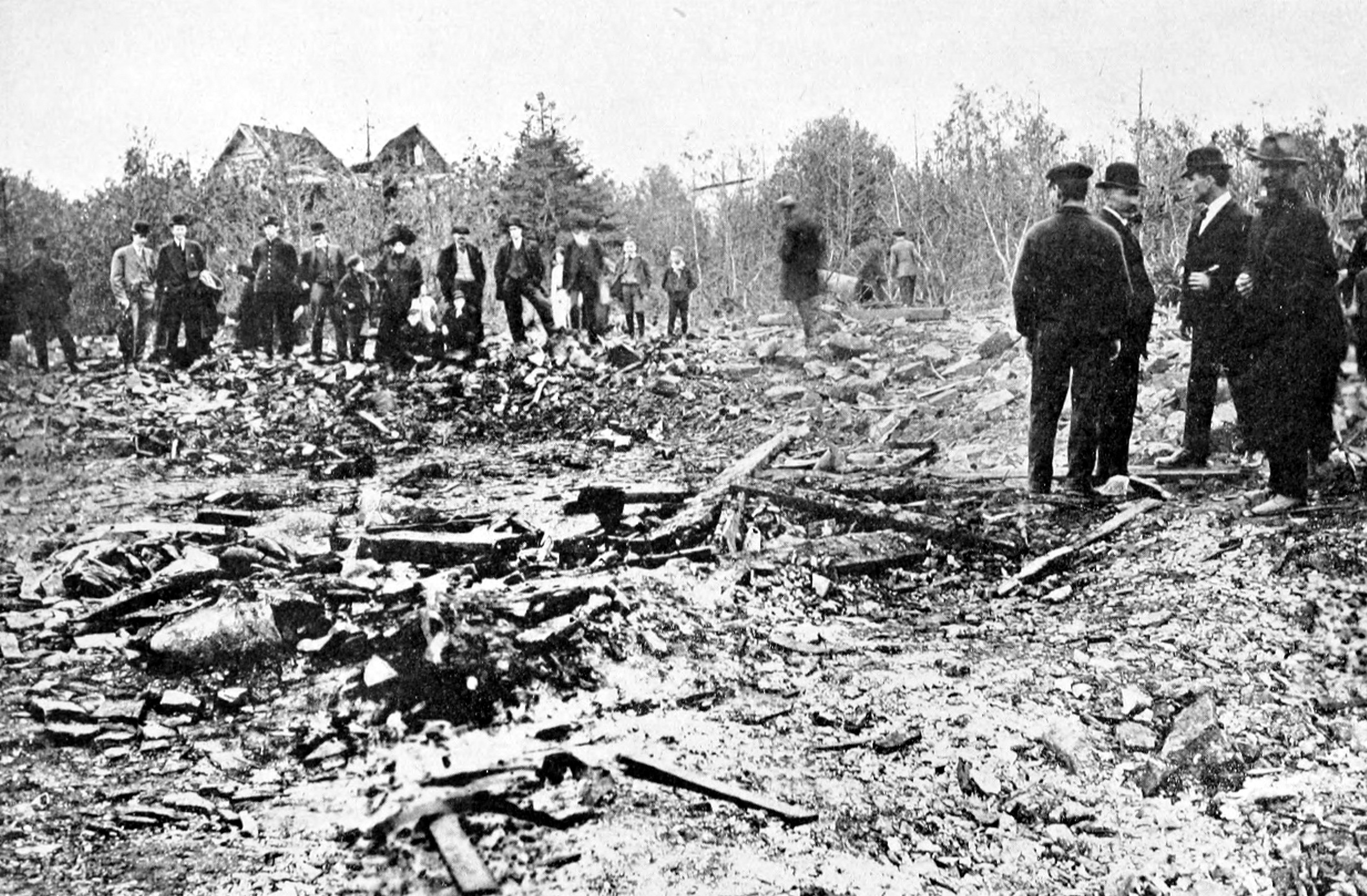
About seven to ten minutes later, more detonator caps exploded causing the largest explosion. in the magazine, a stone building containing about 9,000 pounds of “virite”.
‘Virite’ was the company’s trademarked mixture containing potassium chlorate, a powerful oxidizing chemical. On its own, potassium chlorate is not a high explosive and does not normally detonate simply from heat or fire, but it can greatly intensify fires and become extremely dangerous under the right conditions. At the factory, detonator caps—containing highly sensitive primary explosives—were stored close to the main magazine where the virite was kept. When the fire spread, this proximity significantly increased the risk of a catastrophic explosion[11].
Despite stones and timber flying all around him, Belanger survived with only splashes of mud on his arms, face and hat[10]. The spectators at the ball game, who had gathered close to watch the fire, escaped injury as boulders and wood flew right over their heads[12].
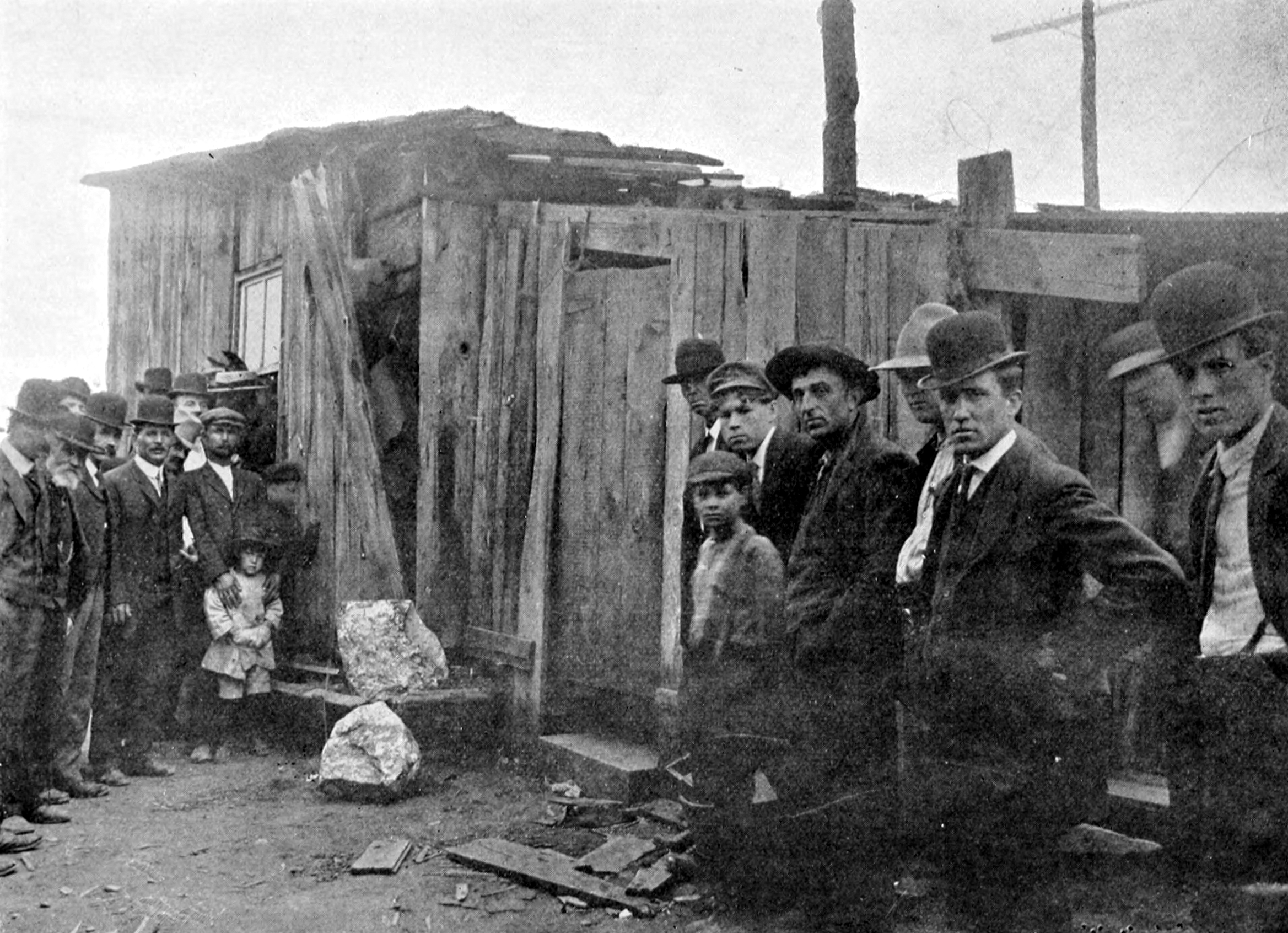
Others further away from the blast were not as fortunate. Stones weighing between 30-100 pounds became projectiles through the air, travelling well beyond 1500 feet (about 450 metres) to residents in the area. According to the Ottawa Citizen, the path of the stones travelled in an east and west direction rather than circular, with most stones flying towards the Chelsea Road and Wrightville in the west and Chaudiere Street and an area known as Little Farm in the east[12][11].
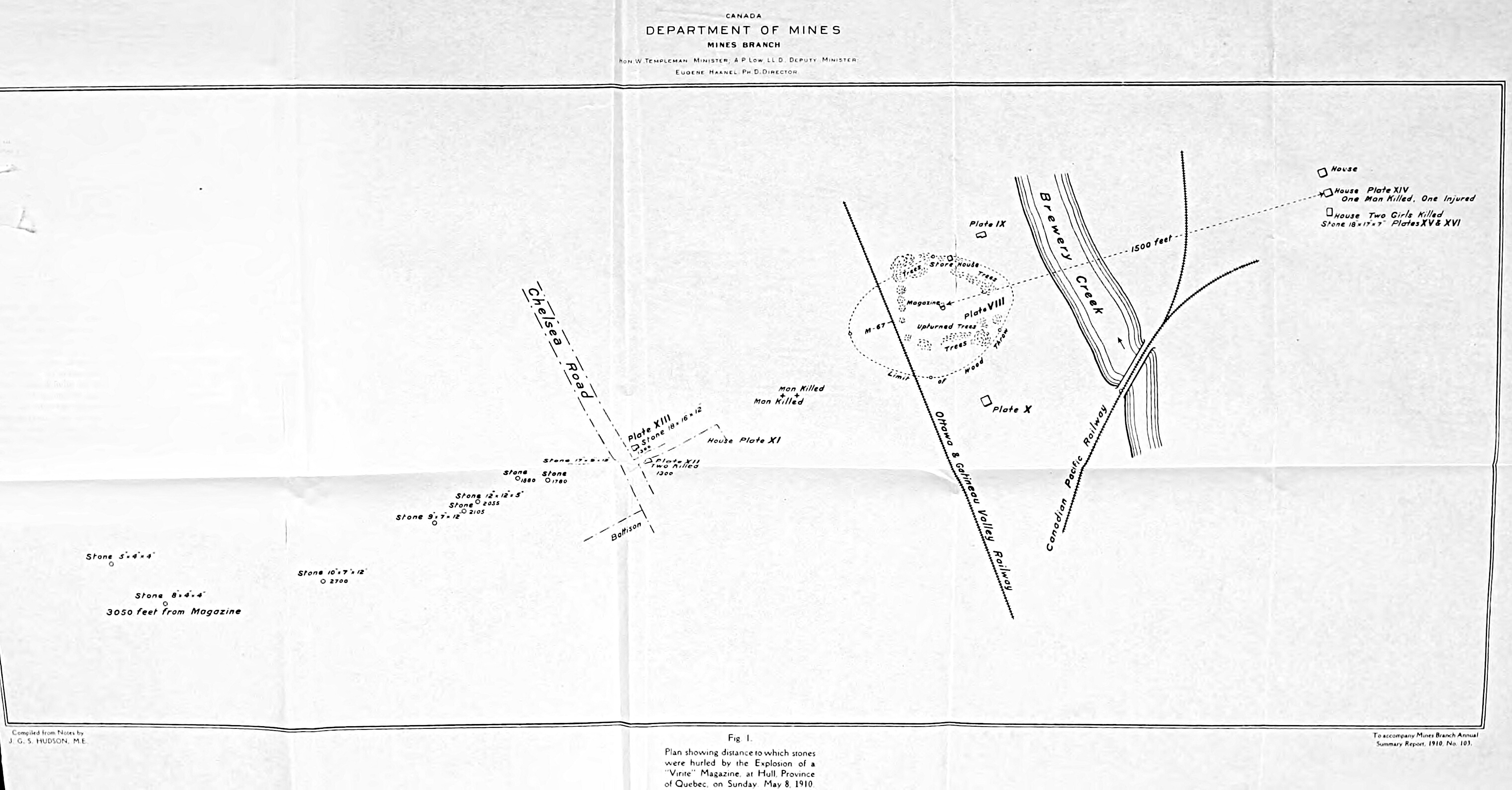
Source: Summary Report
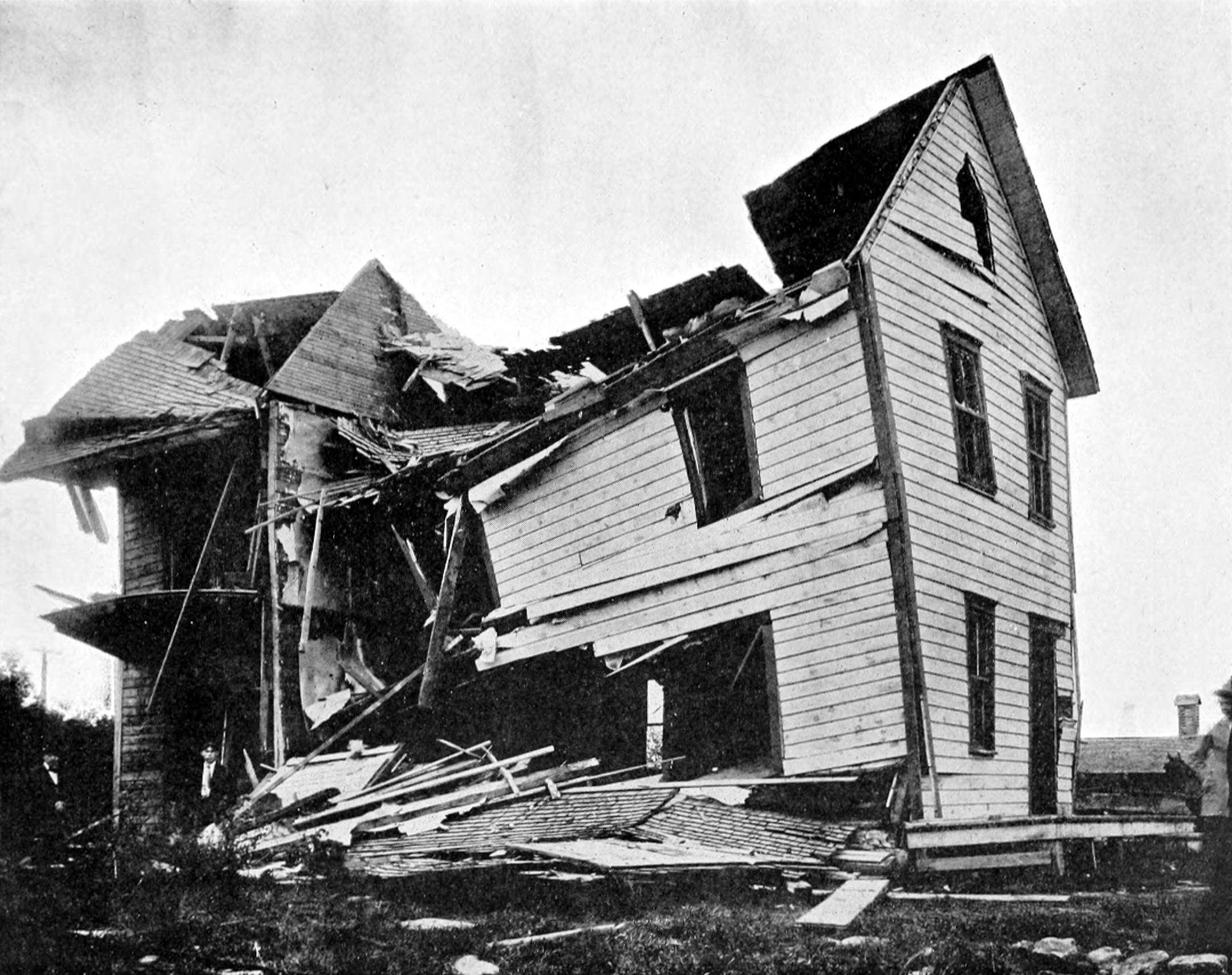
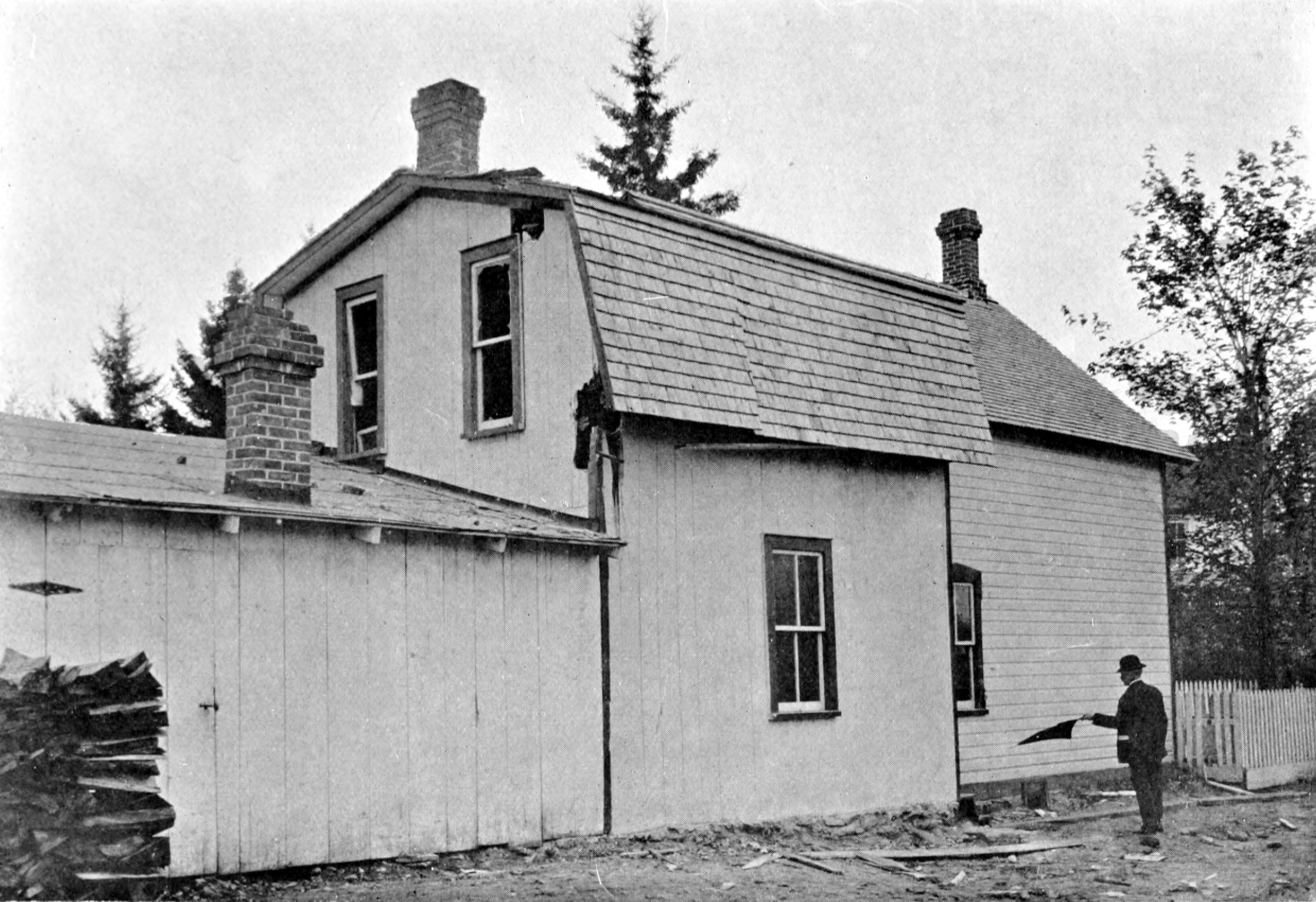
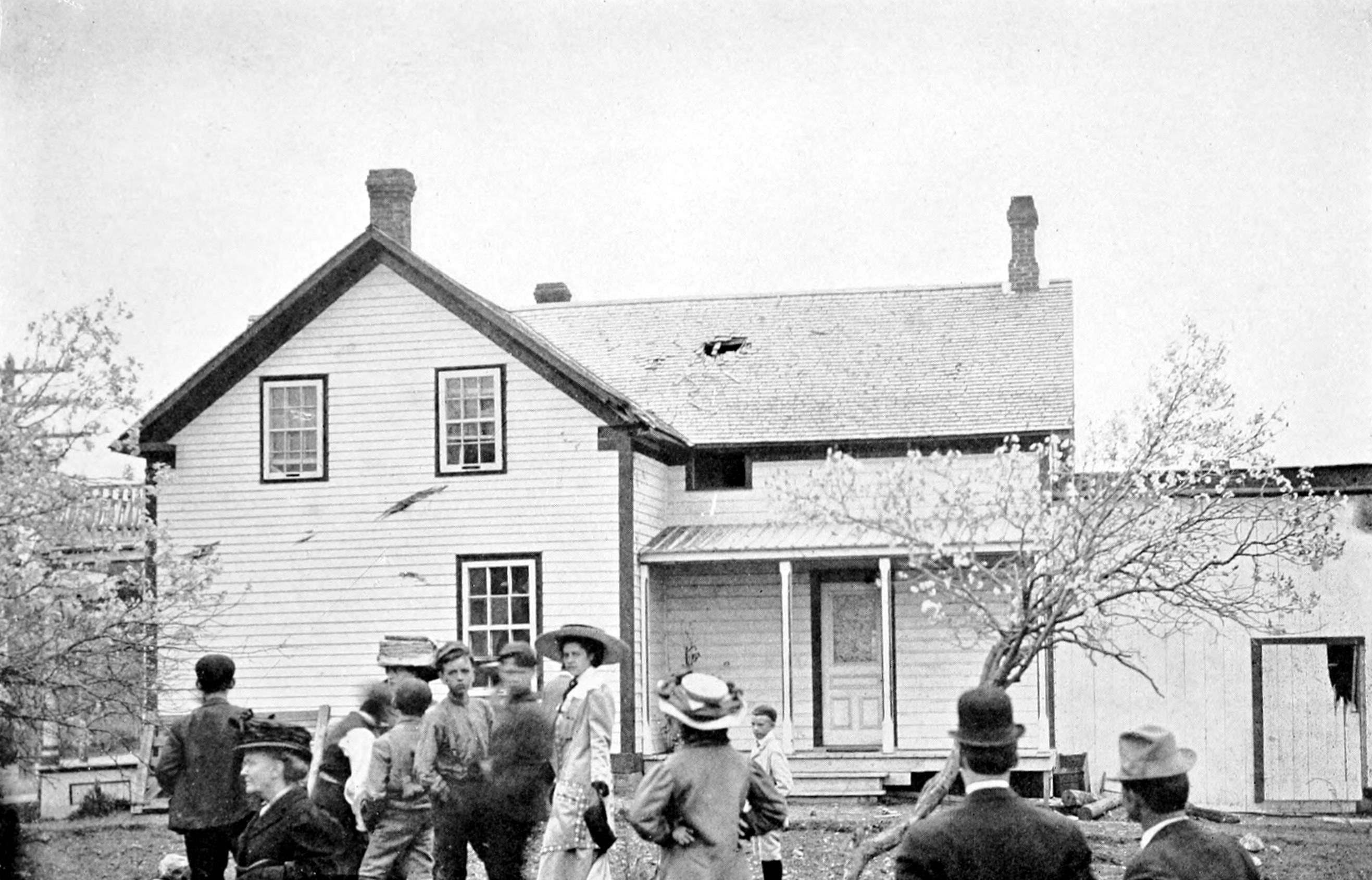
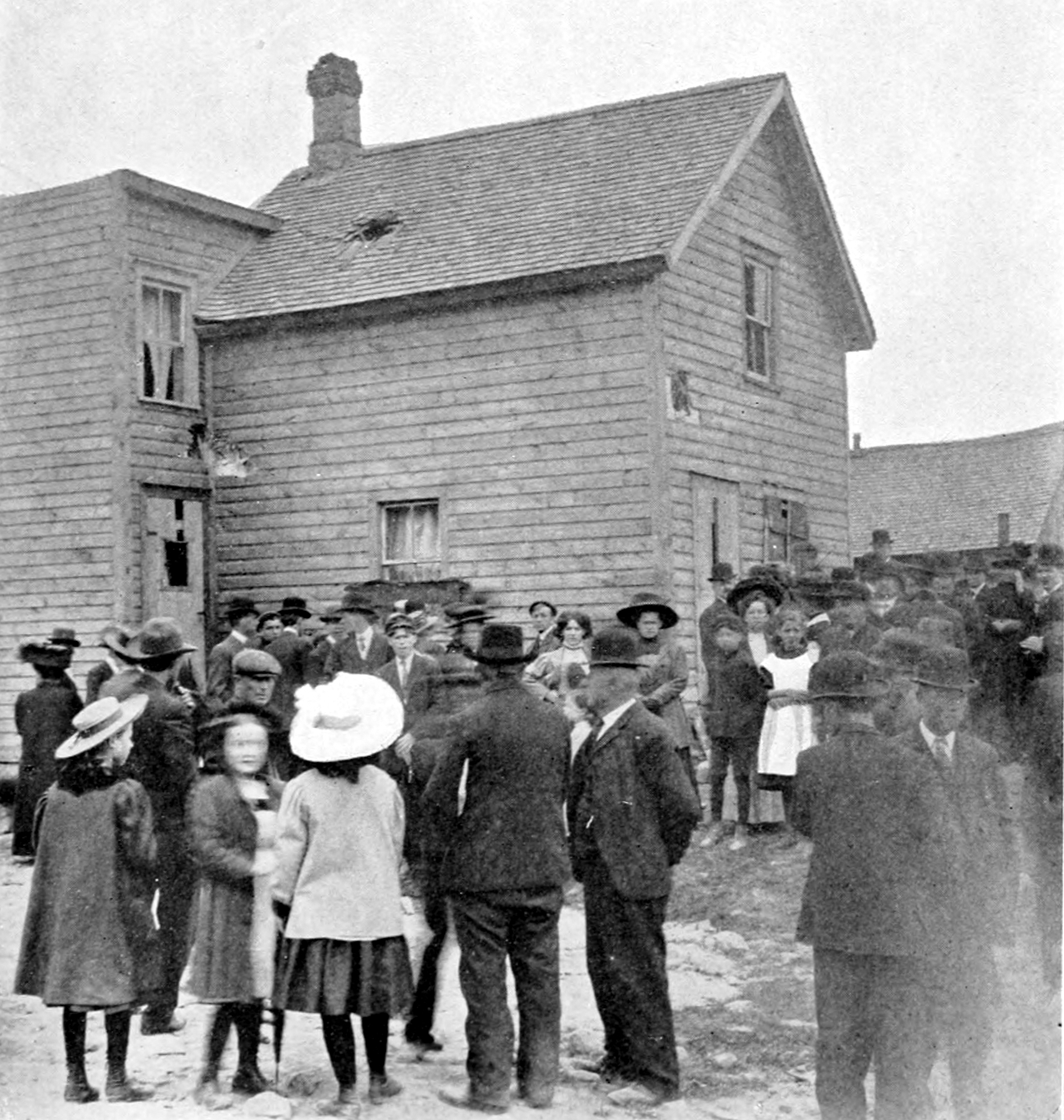
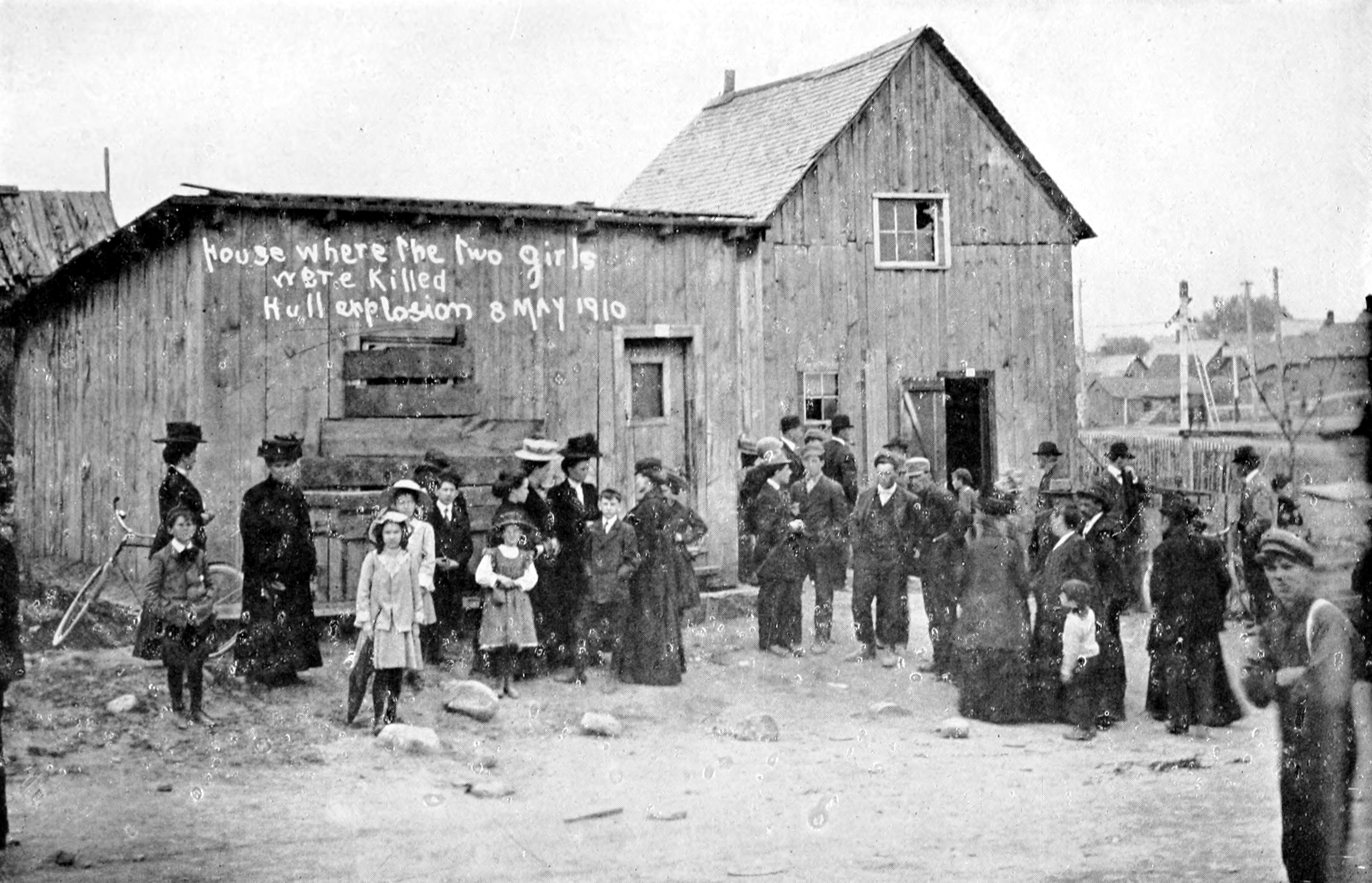
The descriptions of the fatalities in the Ottawa Journal were quite detailed and gruesome[10]. Two 12-year-old boys were decapitated with one getting hit by a flying 30-pound stone near Wrightville when he went to retrieve his cap after playing with a friend in the fields near the factory. His head was found later that night, or in the morning, lodged in a nearby tree. A father and son were struck near a house on the Chelsea Road after joining neighbours on the street to find out what was happening. The son was hit after a large stone was slowed by the house but the father received the full impact of another stone and died the next day. On Chaudiere Street, two sisters were crushed where they sat having dinner with their parents by a boulder which crashed through the roof of their house. A couple doors down, the paper reported the incident of two brothers who were hit as they attempted to get into the house. One brother died instantly while the other survived with both his legs broken. A few others were in the adjacent fields near the factory or on the tracks when they were fatally hit with one dying in the arms of a passerby. Seven people died instantly, two others later died in hospital within a day or so and two more died a few weeks later from complications, bringing the total of deaths to 11. Most of the injured who survived had broken bones due to impacts from debris and none of the killed or injured had any connection to the company. The papers also reported a few animal deaths with a cow being killed in a field, a collie dog getting hit in a house and a cat getting split in two.
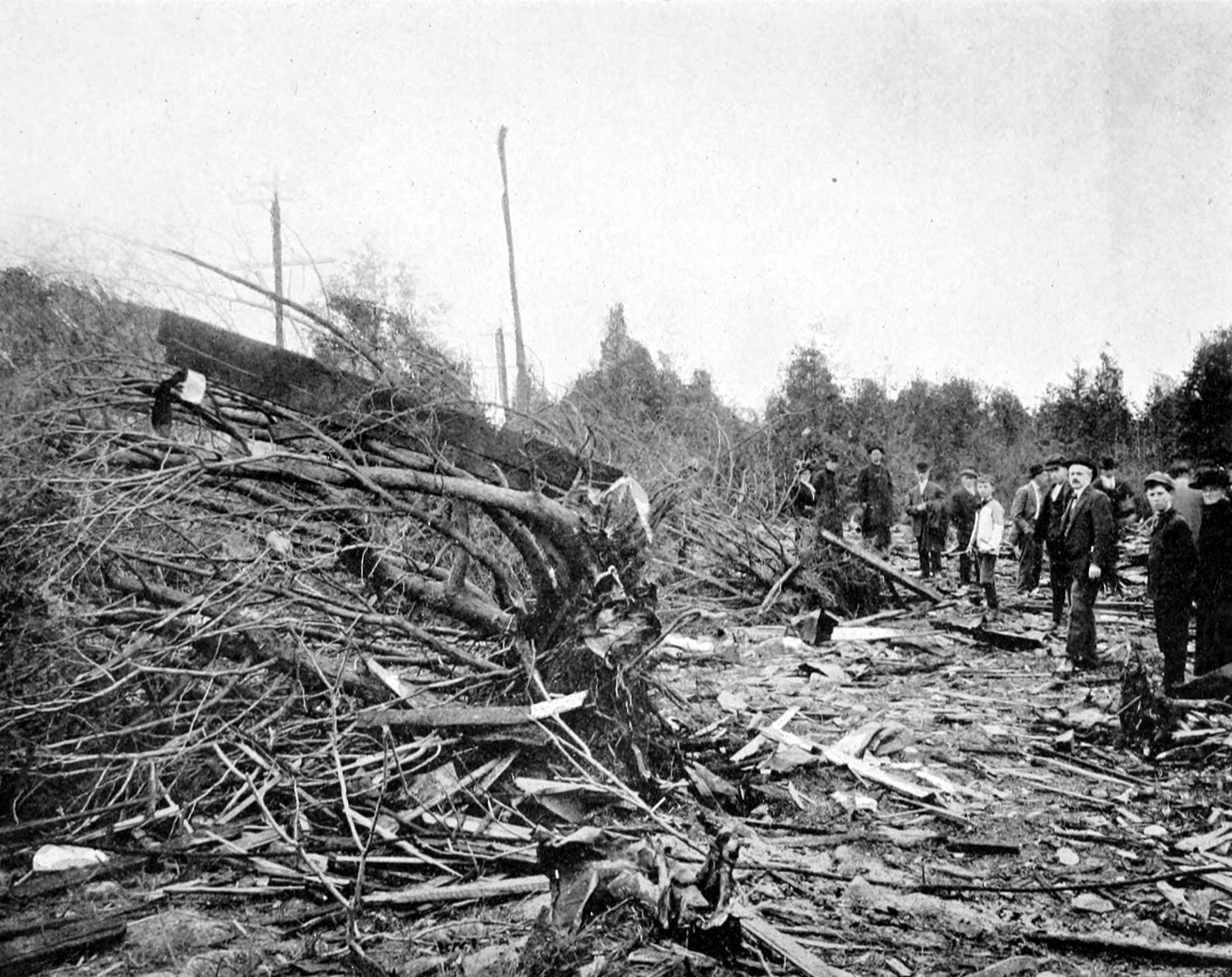
Source: Summary Report
Source: Summary Report
Source: Summary Report
Source: Summary Report
Source: Summary Report
Source: Summary Report
Source: Summary Report
Source: Summary Report
There was also extensive property loss. 30 families were left homeless after several houses were damaged beyond repair and others were left with holes from stone impacts. Even in downtown Ottawa along Wellington, Sparks and Bank Streets, many windows were blown out from the blast. MacKay Presbyterian Church in New Edinburgh reported having broken stain-glassed windows due to the impact of the explosion[10].
At 7pm, a number of boys came running across the field shouting “Run for your lives!” causing the crowd already gathered to stampede in panic. It turned out to be a practical joke the boys were playing and the paper said “the perpetrators, falling into the hands of the crowd, were properly given rough treatment”[13].
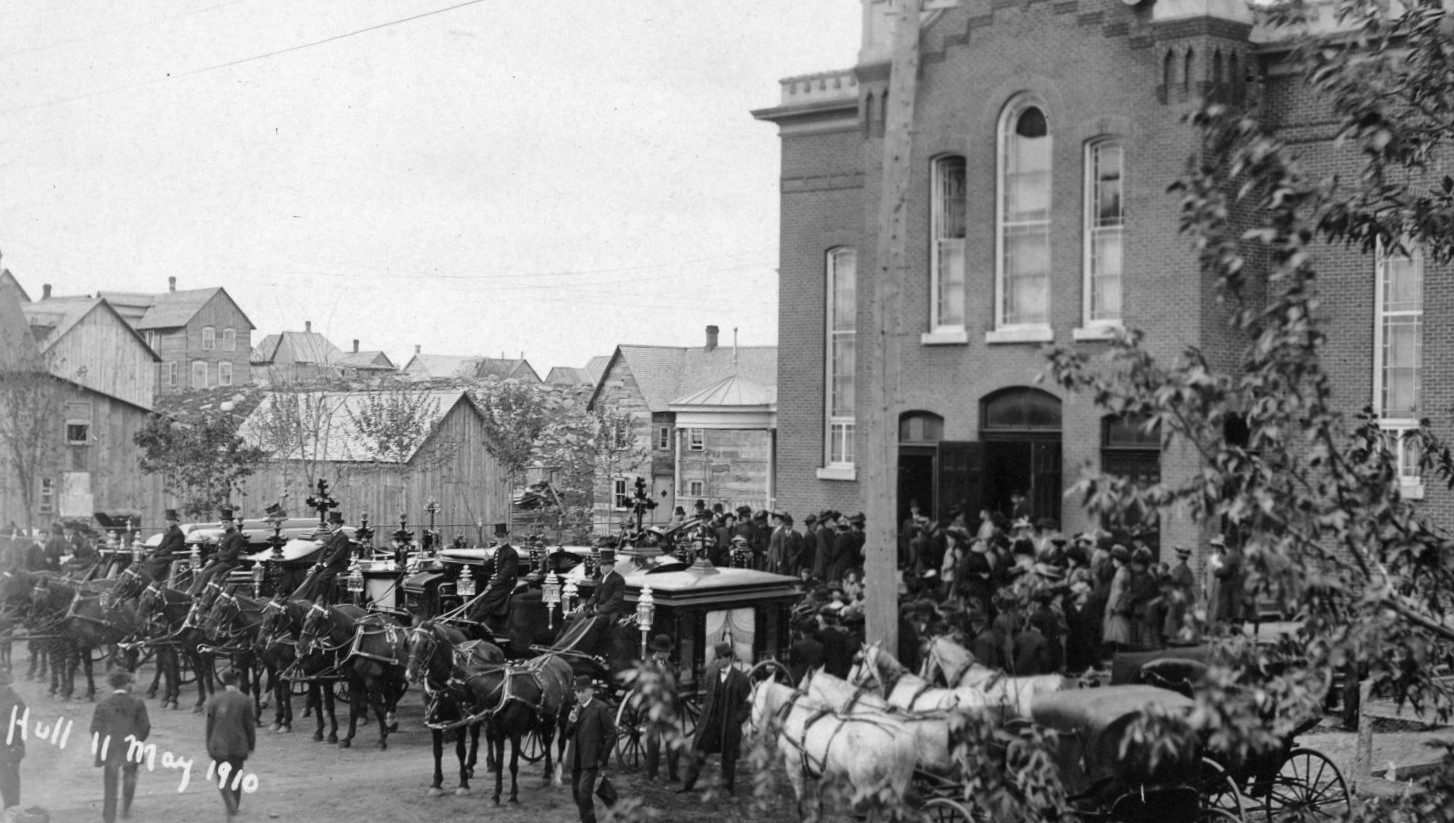
By the next day, people were looking at who was to blame for the explosion with the Mayor saying the company and Lesueur should be held fully responsible. He reminded people that the city did try to remove GEC from their limits but they were stopped by the Superior Court. Suits were brought forth against both the city and the company from local residents.
Based on a report completed a year later, it turns out the explosion could have been a lot worse. The company had shipped out about 20,000 pounds of “virite” on the Friday before the accident[11].
Inquest & Compensation
On May 13, a jury at an inquest found GEC not criminally responsible for the deaths but ruled the company guilty of imprudence for failing to keep a watchman constantly on the premises and for storing detonators close to their magazine. The inquest found the buildings were properly inspected by the Quebec Government a year prior to the explosion[14][11].
On June 10, a benefit concert was held to raise funds for the victims of the explosion. The concert exceeded all expectations with the Ottawa Journal calling it “the musical event of the season”[15]. Louis Cousineau, a lawyer representing the victims in lawsuits against the city and company, concluded the concert with a tribute to LeSueur, GEC’s manager when the explosion took place. He said LeSueur came to him in tears saying he couldn’t sleep, that he was doing all he could and he would not rest until all the bereaved had been provided for. Cousineau ended by saying “Ladies and gentlemen, he has sold his property and automobile and practically beggared himself so that those who suffered shall have some recompense.” He also mentioned the children left fatherless were guaranteed $6 per month (just over $200 today) until they reach the age of fourteen[16]. Due to the “generous” settlements provided by Lesueur and the company, the city decided to return the funds it had collected from residents[17].
New Plant
In 1913, GEC sought to rebuild its plant just outside Chelsea, Quebec[18]. Little is known about the company’s fate after that time. It may have rebranded as the Canadian Explosives Company of Montreal, as later newspaper reports about the Chelsea site use that name[19]. Alternatively, it may have been absorbed by the Canada Explosives Company, which also appears in subsequent coverage[20]. Either way, the municipality of West Hull granted the company permission to build their facility despite the fury of residents[21]. Locals went to the Quebec Legislature to stop construction and initially, the government agreed[22]. They changed their position later in the year to consider giving a license to proceed[20] and in 1915, approval was finally given to build and construction began despite protests from Chelsea and Kingsmere residents[23].
LeSueur continued to work in Ottawa. In fact, after the 1929 sewer explosion, he advised the Ottawa Citizen about the cause saying, a great quantity of gasoline was being dumped in the system[24].
Sources:
- Library and Archives Canada (LAC), RG 95-1, vol. 2563, “Application for Incorporation under ‘The Companies Act, 1902,’” 1905/06–1924/10.
- Stock, John T., and Mary Virginia Orna, eds. Electrochemistry, Past and Present. ACS Symposium Series, no. 390. Washington, DC: American Chemical Society, 1989.
- “Contract Figures”. The Ottawa Citizen. August 2, 1905, 4. Accessed April 5, 2026. https://www.newspapers.com/image/456023739
- “Double Tracking Main St. Hull”. The Ottawa Citizen. June 5, 1906, 3. Accessed April 5, 2026. https://www.newspapers.com/image/455748479
- “Hull City Council”. The Ottawa Citizen. September 18, 1906, 3. Accessed April 5, 2026. https://www.newspapers.com/image/455540687
- “Notes of Hull”. The Ottawa Journal. October 12, 1906, 11. Accessed April 5, 2026. https://www.newspapers.com/image/41495242
- “He Could Not Have Spoken”. The Ottawa Journal. November 29, 1906, 1. Accessed April 5, 2026. https://www.newspapers.com/image/41495771
- Villemaire, Luc. “ROCHON, ALFRED.” Dictionary of Canadian Biography, vol. 13. University of Toronto/Université Laval, 2003. Accessed February 28, 2026. http://www.biographi.ca/en/bio/rochon_alfred_13E.html
- “Notes of Hull”. The Ottawa Journal. December 28, 1906, 9. Accessed April 5, 2026. https://www.newspapers.com/image/41738021
- “Death and Wreck Caused By Explosion Last Evening”. The Ottawa Journal. May 9, 1910, 2. Accessed April 5, 2026. https://www.newspapers.com/image/43443236
- Canada. Department of Mines, Mines Branch. Summary Report of the Mines Branch of the Department of Mines for the Calendar Year Ending December 31, 1910. Sessional Paper no. 26a. Ottawa: C. H. Parmelee, 1911. Accessed February 28, 2026. https://archive.org/details/1911v45i18p26a_0758
- “City of Hull Plunged Into Mourning By Terrible Catastrophe of Sunday Evening”. The Ottawa Citizen. May 9, 1910, 1. Accessed April 5, 2026. https://www.newspapers.com/image/455719091
- “Scenes Following Explosion As Related By Eyewitnesses”. The Ottawa Citizen. May 9, 1910, 12. Accessed April 5, 2026. https://www.newspapers.com/image/455719541
- “Not Criminally Responsible”. The Ottawa Citizen. May 14, 1910, 2. Accessed April 5, 2026. https://www.newspapers.com/image/455721374
- “Hull Concert Well Attended”. The Ottawa Journal. June 11, 1910, 20. Accessed April 5, 2026. https://www.newspapers.com/image/43443612
- “Doing His Best”. The Ottawa Citizen. June 11, 1910, 1. Accessed April 5, 2026. https://www.newspapers.com/image/455693142
- “May Be Returned”. The Ottawa Citizen. August 19, 1910, 1. Accessed April 5, 2026. https://www.newspapers.com/image/455728978
- “New Powder Plant”. The Ottawa Citizen. July 22, 1913, 2. Accessed April 5, 2026. https://www.newspapers.com/image/455586830
- “Dynamite Storage Warehouse May Be Located Within A Mile of Reservoir To Be Considered By Ottawa At Chelsea”. The Ottawa Citizen. October 25, 1913, 1. Accessed April 5, 2026. https://www.newspapers.com/image/456380462
- “Heard Both Sides re Powder Plant”. The Ottawa Citizen. October 29, 1913, 1. Accessed April 5, 2026. https://www.newspapers.com/image/456380905
- “Formal Protest To Provincial Treasurer Against License For Dynamite Works”. The Ottawa Citizen. August 11, 1913, 2. Accessed April 5, 2026. https://www.newspapers.com/image/456371986
- “Powder Plant Erection At Chelsea Is Stopped By Government Order”. The Ottawa Journal. October 15, 1913, 1. Accessed April 5, 2026. https://www.newspapers.com/image/43914637
- “Chelsea Becomes A Busy Resort”. The Ottawa Citizen. June 26, 1915, 14. Accessed April 5, 2026. https://www.newspapers.com/image/455658815
- “Agrees With Editorial”. The Ottawa Citizen. May 30, 19295, 3. Accessed April 5, 2026. https://www.newspapers.com/image/455663258